What Happens to Your Rankings When You Stop SEO?
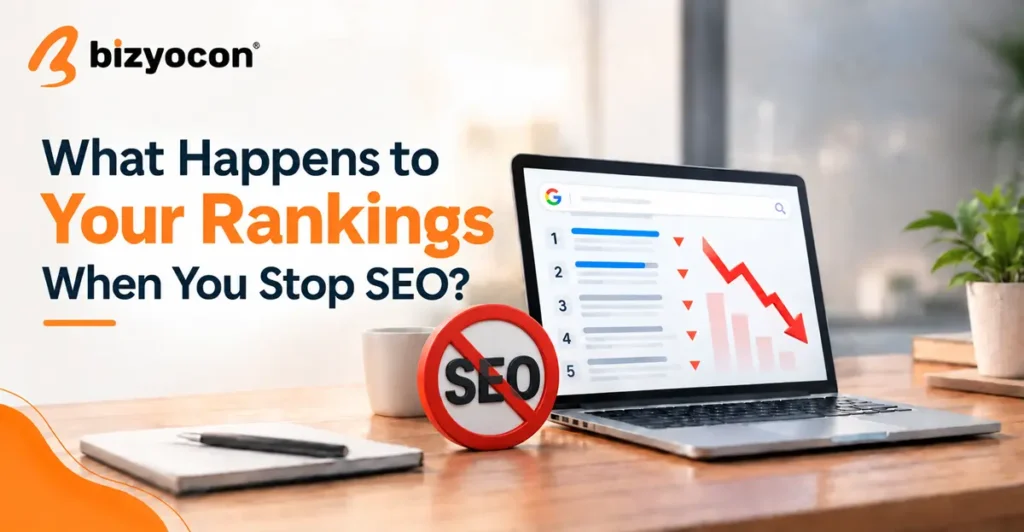
When you stop SEO, your rankings usually hold for the first one to two months because earlier work is still paying off. After that, competitive keywords start slipping, content goes stale, backlinks decay and technical issues build up unnoticed. In most markets, the drop in organic traffic and leads becomes clearly visible within six to twelve months. You spent months getting your website onto the first page of Google. The enquiries are coming in, the traffic graph is finally pointing up, and now a fair question comes up in a budget meeting: if the rankings are already there, why keep paying for SEO every month? It is a question almost every business owner asks at some point, and the honest answer is not “everything collapses the moment you stop”. Rankings rarely disappear overnight. They slip, slowly at first and then faster, as competitors keep publishing, Google keeps updating, and your own website quietly ages. How quickly that happens depends on your industry, your competition and how strong your foundation was when you stopped. This guide walks you through what actually happens after you stop SEO, month by month, what you keep and what you lose, and how to cut back on SEO spend without throwing away the results you already paid for. Why Rankings Don’t Stay Put on Their Own Search rankings are not a fixed position you buy once. They are a comparison. Google looks at every page competing for a keyword and decides which one answers the search best today, not which one answered it best last year. So even if your website stays exactly the same, your position can fall simply because someone else got better. That is the main reason SEO is not a one-time investment. Your competitors are refreshing their content, earning new backlinks and improving page speed while you stand still. At the same time, Google rolls out core algorithm updates several times a year and keeps changing how search results look, with AI Overviews, local packs and “People also ask” boxes pushing plain blue links further down the page. If you want to understand how that shift affects visibility, our guide on GEO vs SEO explains it in detail. Your own website also changes with time, even when nobody touches it. Statistics become outdated, product pages list old specifications, and the pages that once linked to you get deleted or redesigned. This slow loss of freshness and authority is often called content decay, and it is one of the quietest reasons rankings drop. The Timeline: What Happens After You Stop SEO There is no exact date on which rankings fall, but the pattern is fairly consistent across most websites. The early months feel safe, which is exactly why many businesses assume stopping SEO had no effect. The real impact shows up later, when it is harder and slower to reverse. The table below shows the general pattern for a business in a moderately competitive market. Low-competition niches move slower, and crowded local markets move faster. Time After Stopping What Usually Happens What You Notice in Google Search Console Month 1–2 Rankings hold steady because past content, links and fixes are still working Clicks and impressions look almost unchanged Month 3–6 Competitors overtake you on high-value keywords; new pages take longer to get indexed Average position slips a few places on your main keywords Month 6–12 Organic traffic and enquiries drop visibly; unresolved technical errors start adding up Impressions fall, click-through rate falls and top pages lose traffic 12 months and beyond Competitors own most of your former keywords; regaining them needs a full recovery effort Traffic has dropped sharply from its peak and keeps falling The key point is the delay. Because SEO results lag behind the work, the effect of stopping also lags behind. By the time the drop is obvious in your lead numbers, you have usually lost several months of ground. What You Keep vs. What You Lose Stopping SEO does not wipe out everything. The work already done still has value, and some of it keeps helping your website for a long time. Earned backlinks from genuine industry websites, well-written evergreen content and a clean technical setup do not expire the day your contract ends. What fades is anything that depends on being active. Rankings for competitive keywords, freshness signals and your visibility in the local map pack all need regular attention. You also stop gaining new ground, which means every new search trend, product or service you add goes unoptimized. What You Keep What You Gradually Lose Backlinks already earned from relevant websites Positions on high-competition, high-value keywords Evergreen pages that are already indexed Freshness signals as content and data go out of date Domain trust built over the years Visibility in the Google local pack and on Maps Branded searches from people who already know you Coverage of new keywords, services and search trends Technical fixes, until the next site update breaks them Mentions and citations in AI Overviews and AI answers That last row matters more than it used to. AI-powered search tools prefer sources that are current, well-structured and frequently referenced. A website that stops publishing and updating tends to get cited less over time. Our guide on getting your business recommended in AI answers covers what those tools look for. How Fast You Drop Depends on Your Industry Two businesses can stop SEO in the same month and see completely different results. The biggest factor is how many competitors are actively fighting for the same searches, and how often those competitors update their websites. Low-Competition B2B and Manufacturing Niches Manufacturers of industrial equipment, engineering products or specialised machinery often compete with only a handful of websites for each product keyword. Many of those competitors do little SEO themselves. In these niches, rankings can hold for a long time after you stop, sometimes for many months. The risk here is not a sudden fall but missed growth, because new product keywords and export searches
Web Development Explained: Types, Process, Technologies and Cost
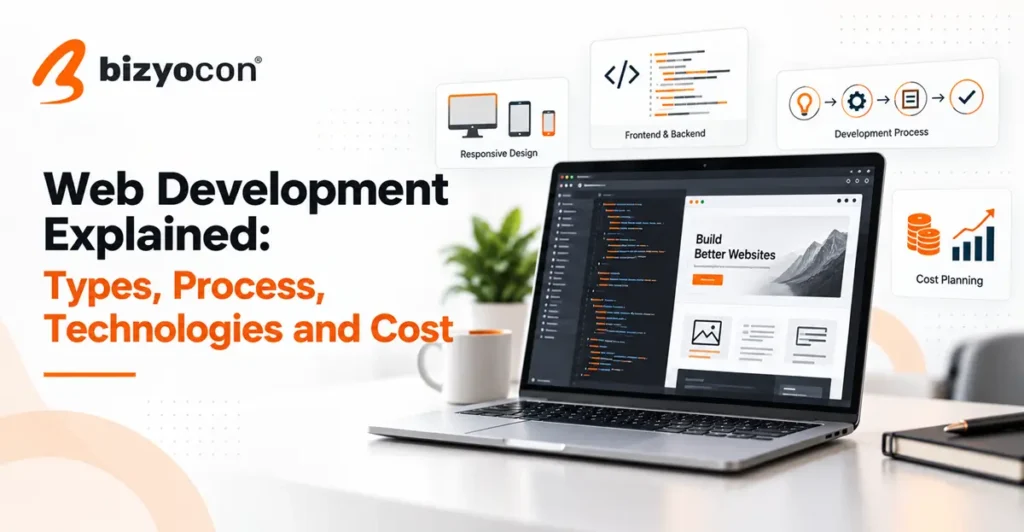
Most business owners do not need to learn how to code. But almost every business owner eventually has to make decisions about code – which platform to build on, what a fair quote looks like, why one agency says six weeks and another says six months, and whether a ₹40,000 website and a ₹4,00,000 website are really doing different jobs. This guide is written for that moment. It explains what web development actually involves, the main types of web development and who each one suits, the step-by-step process a good project follows, the technologies you will hear named in proposals, and what all of it typically costs in the Indian market in 2026. No code required. Just enough understanding to ask better questions and buy more confidently. What Is Web Development? Web development is the work of building and maintaining everything that makes a website or web application function – the pages people see, the logic behind them, and the servers that deliver them. If a website were a shop, web design decides what it looks like and how customers move through it. Web development is the construction: the structure, the wiring, the billing counter that processes a payment, and the stockroom that knows what is in stock. Web Development vs Web Design “Website design & development” is sold as one phrase, which hides a real difference in skills and deliverables. Web Design Web Development Focus How it looks and feels to use How it works and whether it holds up Deliverables Wireframes, mockups, design system Working code, database, integrations, live site Typical tools Figma, Adobe XD, Photoshop HTML, CSS, JavaScript, backend languages, databases Failure looks like Confusing navigation, poor readability Slow pages, broken forms, downtime, security holes Both matter. A beautiful site that takes eight seconds to load loses visitors; a fast site nobody can navigate loses them just as quickly. Types of Web Development Web development is grouped two ways: by the layer a developer works on, and by the kind of website a business is building. Proposals use both, which is why “how many types of web development are there” has more than one answer. Types by Layer: Frontend, Backend and Full-Stack • Frontend (client-side) – everything that loads in the browser: layout, buttons, menus, forms and responsive behaviour on phones. If you can see it or click it, a frontend developer built it. • Backend (server-side) – what the visitor never sees: the database of products, users and orders, the rules that run on a form or payment, and integrations with payment gateways, CRMs and courier APIs. • Full-stack – one developer or team across both layers. Efficient on small and mid-sized projects; large products do better with specialists. • DevOps – hosting, deployment, backups, security patching and uptime. Setup work on a small site; an ongoing discipline on a live store. Types of Websites by Business Need These six describe what is actually being built for the business, so this is the list that matters when you are buying. The choice comes down to one question: how often does the content or data change, and who changes it? 1. Static Websites Fixed pages that look the same to every visitor until a developer edits the files. No database, no login. • Best for: brochure sites, portfolios, landing pages, early-stage businesses that need credibility and contact details. • Trade-off: fastest and cheapest to run, but you cannot update content yourself and it stops scaling past a few dozen pages. • Built with: HTML, CSS, JavaScript, or a generator such as Astro or Hugo. 2. Dynamic Websites Pages assembled on request from a database, so content changes without touching code. Most business websites are this. • Best for: companies publishing blogs, case studies, service pages, careers listings or location pages. • Trade-off: you control the content and pages scale easily, but there are more parts to host, update and secure. • Built with: WordPress, or a custom backend in PHP, Node.js, Python or .NET. 3. E-commerce Websites Adds the machinery of selling: catalogue, cart, checkout, payment gateway, tax and shipping rules, and customer accounts. • Best for: any business taking payment online – D2C brands, retailers moving beyond marketplaces, B2B distributors. • Trade-off: you own the customer relationship and pay no commission, but inventory, payments, logistics and uptime become business-critical. • Built with: Shopify, WooCommerce, Magento, or a custom headless build. 4. Web Applications and SaaS Products Software that runs in a browser – dashboards, booking systems, internal tools, marketplaces, subscription products. People use it, usually after logging in. • Best for: businesses whose product or core process is the software itself, or workflows no off-the-shelf tool covers. • Trade-off: built exactly around your process, but the longest and most expensive category, and it needs a maintenance budget from day one. • Built with: React or Vue; Node.js, Python, .NET or Java; PostgreSQL or MongoDB; cloud hosting. 5. CMS-Based Websites A CMS gives non-technical staff a dashboard to publish and edit. Technically a delivery approach, but it is how most business websites get built. • Best for: marketing-led sites that publish regularly, teams without in-house developers, projects that must launch quickly. • Trade-off: fast to build and easy to hand over, but plugin sprawl slows sites down and heavy customisation can cost more than a lean custom build. • Built with: WordPress, Shopify, Webflow, Drupal, or headless options such as Strapi or Contentful. 6. Custom Portals and Enterprise Systems Customer, dealer, vendor, HR or education portals – sitting between web applications and internal IT. • Best for: organisations with multiple user roles, approval workflows, and ERP or CRM systems that must talk to each other. • Trade-off: removes manual coordination and creates an audit trail, but needs discovery and integration work; timelines run in months. • Built with: .NET, Java or Node.js, role-based access, single sign-on, REST or GraphQL APIs. Choosing between them: if content changes but
What Is a 3D Virtual Tour and Why Real Estate Businesses Need It
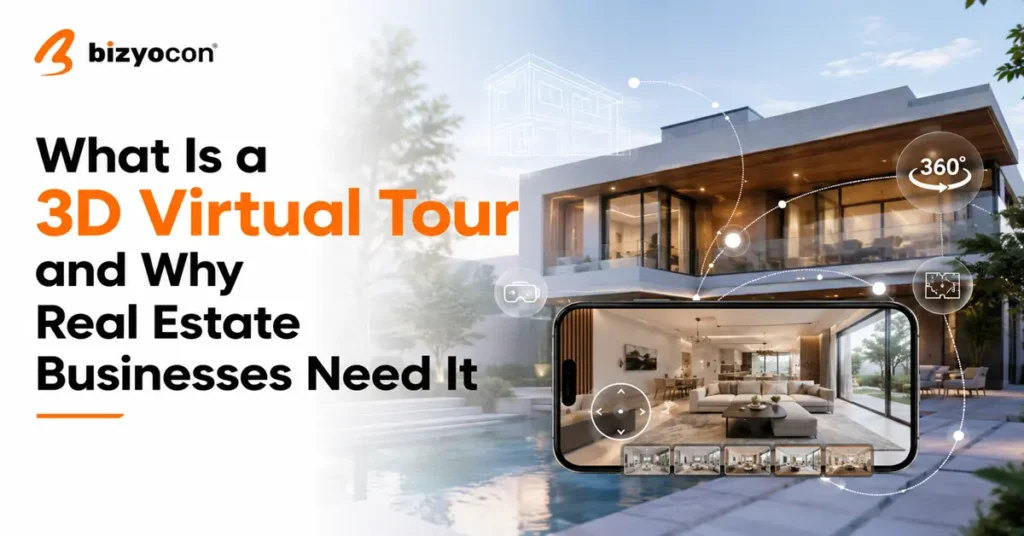
A 3D virtual tour is an interactive digital replica of a property, captured with a depth-sensing camera, that buyers can walk through on their own from any device – with a dollhouse view, floor plan and real measurements. Real estate businesses need one because it markets the layout rather than individual rooms: listings with 3D tours have been shown to sell up to 31% faster and at 4–9% higher prices, while cutting wasted showings by letting unsuitable buyers rule themselves out before they visit. Photos sell a room. A 3D virtual tour sells the layout – and layout is the one thing buyers can’t judge from a listing, the thing that makes them drive across town to find out, and the thing that ends a deal at the front door when it turns out wrong. Below: what the format actually is, how it’s built, how it compares to the alternatives, and the commercial case for putting one on every listing. What Is a 3D Virtual Tour? A 3D virtual tour is an interactive digital replica of a property that a buyer can walk through on their own, in any order, from any device. It’s built from depth data – the camera measures distance as well as colour – so the finished tour holds the property’s real dimensions, not just its appearance. That geometry is what separates it from every other listing format, and it produces three features buyers genuinely use: Be careful with the label. Plenty of listings advertise a “virtual tour” that’s really a photo slideshow or a 360 panorama, which is a different product entirely. How Does a 3D Virtual Tour Work? Three stages, and none of them involve a film crew. 1. Capture. A depth-sensing camera is placed on a tripod at a series of points through the property. Each position records a full 360° panorama plus distance data, usually via infrared or LiDAR. A 2,000 sq ft home takes roughly 60 to 100 scan positions, and Matterport puts a standard residential capture at 1.5 to 2.5 hours on site including setup. 2. Processing. The scans are stitched into a point cloud, then converted into a textured 3D mesh – a digital twin of the space. This is where the dollhouse view, the floor plan and the measurement tool come from. Processing typically runs overnight. 3. Delivery. The tour is hosted and delivered as a single embeddable link – added to your 99acres, Magicbricks or Housing.com listing, embedded on your own project page, and shared over WhatsApp or email. Most professional providers in India hand over a live link within 48 to 72 hours of the shoot. 3D Virtual Tour vs 360 Tour vs Video Walkthrough These three get sold interchangeably. They’re not the same product, and the difference comes down to how much control the buyer gets. Format What it captures Buyer control Floor plan & measurements Typical cost 3D virtual tour Depth + colour → true 3D model Walk anywhere, any order Yes ₹10,000–₹30,000 360 tour Flat panoramas, no depth Jump between fixed points No ₹5,000–₹15,000 Video walkthrough Linear footage None – watch start to finish No ₹15,000–₹60,000 Photo gallery Stills Click next No Bundled A 360 tour looks almost identical in a thumbnail and behaves very differently in use. It gives height and width but no depth, so the buyer hops between bubbles without ever forming a mental map of the floor. Video is the better emotional format – paced, scored, and it works passively in a social feed. But it answers “what does this feel like,” not “where is everything.” Listings that perform best usually run both: property video for the scroll, 3D tour for the buyer who’s already interested and now wants to interrogate the layout. Why Are 3D Virtual Tours Important in Real Estate? Because buyer behaviour moved and most listings didn’t. Property search in India now starts online and stays online far longer than it used to. NRI and out-of-state buyers shortlist entirely from a phone, and the scale of the market means a Gujarat or Mumbai project is competing for attention with hundreds of others on the same portal page. The listings that survive that shortlist are the ones that answer questions instead of raising them. A gallery of twelve beautiful photos raises questions: how far is the kitchen from the living area, is there a corridor between them, where does that door go? The supply side hasn’t caught up. International benchmarking backs this – a study of 25,000 listings found 94% had no genuine virtual tour while 58% of buyers wanted one, and anyone who has scrolled 99acres or Magicbricks knows Indian inventory sits at a similar ratio. Documented demand, unmet by nine listings out of ten. There’s a second effect that doesn’t show up in marketing metrics at all. A 3D tour front-loads qualification: buyers who would have walked in and immediately disliked the layout now filter themselves out at home. You get fewer viewings and better ones. For teams running high listing volumes, that saved time is often worth more than the price lift. How 3D Virtual Tours Affect Sale Speed and Price The sales effect is documented well enough to argue on numbers rather than instinct. India doesn’t yet have a published listing-level study on this, so the hard numbers come from international datasets – but the buyer behaviour they measure is the same one driving Indian portal traffic. An analysis of 143,575 listings across four markets found properties with 3D tours sold up to 31% faster in the strongest market and 9% faster on average, closing at prices 4–9% higher. A separate matched study of 700 listings – 350 with tours, 350 without – found a 4.8% price lift and roughly 20% fewer days on market. Portal-side engagement data points the same way: listings with interactive 3D tours draw substantially more page views, saves and shares than comparable listings without one. Vendor data has an obvious interest, so discount it. But independent datasets
How to Get Your Business Recommended by ChatGPT, Gemini and Google AI Overviews
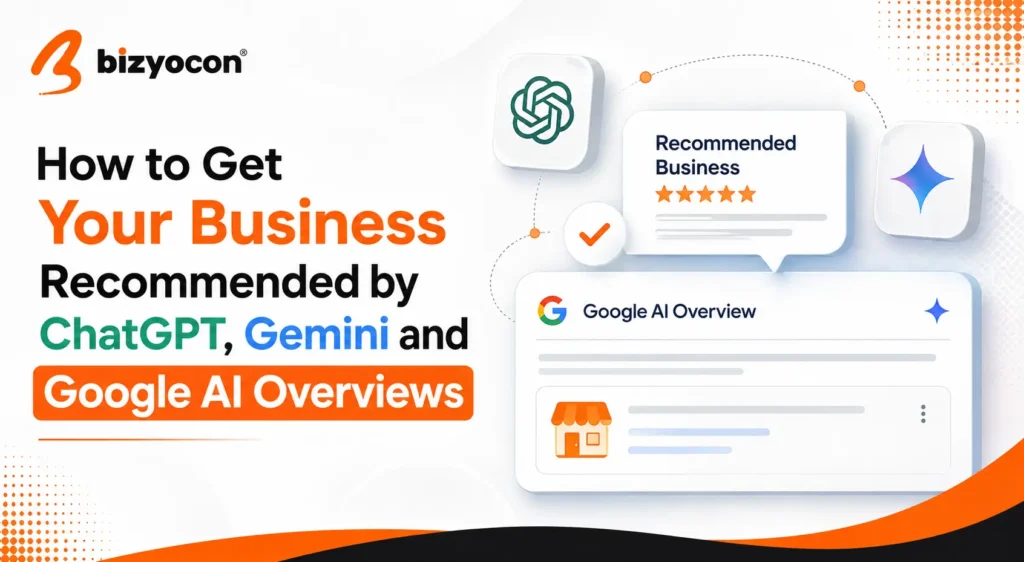
AI engines recommend businesses they can verify. To be recommended by ChatGPT, Gemini and Google AI Overviews, you need four things working at once – a consistent entity identity across the web, content structured so answers can be pulled out cleanly, schema markup that labels your facts for machines, and third-party mentions that confirm what you say about yourself. Ranking #1 on Google is no longer enough on its own. Something quietly changed in how customers find businesses. They stopped searching and started asking. Instead of typing “best SMC panel tank manufacturer” and scanning ten blue links, a buyer now asks ChatGPT: “Which companies make SMC panel tanks in Gujarat, and how do I choose between them?” The AI returns three names, a comparison, and a recommendation. If your business is not one of those three names, you were never in the running – and you will never see it in your analytics, because there was no click to lose. That is the shift. Search used to send you visitors. AI search decides whether you get mentioned at all. Why this matters right now The numbers explain the urgency better than any argument. Roughly 64.8% of Google searches now end without a click, up from about 50% in 2019. When an AI Overview appears on a result, the zero-click rate climbs to a median of around 80%, according to analyses of AI-era search behaviour. Semrush data showed AI Overviews appearing on 13.14% of US desktop queries by 2025 – roughly double the figure from the start of that year. Commerce is moving the same way. Braze research projects that consumer use of AI shopping agents will rise from 19% to 46% by the end of 2026. Those agents do not read your homepage banner or respond to your ad budget. They read structured data. Put plainly: a growing share of buying decisions is being shaped before anyone visits a website. If you have been following a traditional SEO checklist and nothing else, you are optimising for a shrinking part of the journey. We covered the strategic difference between the two disciplines in our breakdown of how generative engines differ from classic search – this article is the execution manual. How do AI engines decide which businesses to recommend? AI answers are not generated from memory alone. Most modern systems follow three steps, and each step is a place you can either win or disappear. 1. Retrieval. The engine runs its own searches and pulls a shortlist of sources. If your page cannot be crawled, or does not exist for that question, you are out at step one. 2. Grounding. The model reads those sources and looks for clear, verifiable statements it can stand behind. Vague marketing copy gives it nothing to hold on to. 3. Citation. The model composes an answer and credits the sources it used. Consensus wins here – when five independent sources say the same thing about you, the model treats it as fact. The practical takeaway: AI engines are not rewarding the loudest brand. They are rewarding the most verifiable one. The 9-Step AI Search Optimization Playbook 1. Build an entity, not just a website An entity is a thing the machine understands as real: a company with a name, a location, founders, services and a history. Your website is only one signal of that entity. Make sure your business name, address, phone number and description are identical on your website, Google Business Profile, LinkedIn company page, Justdial, IndiaMART, Crunchbase and every directory you appear on. Inconsistency is the single most common reason an AI engine refuses to state a fact about a business – it cannot tell which version is true. Add real founder and team pages with full names, roles and credentials. A company with named humans behind it is far easier for a model to trust than an anonymous brand. 2. Answer the question in the first 100 words AI engines extract answers, they do not read essays. Every important page should state its core answer within the opening paragraph, in plain language, before any storytelling. A useful test: if someone read only the first 60 words of your page, would they have the answer they came for? If not, rewrite the opening. 3. Structure content the way machines read it Format is doing real work now. The patterns that get extracted most often: • Question-based H2s that mirror how people actually ask (“How much does a 3D walkthrough cost?” beats “Pricing”) • A 40-60 word direct answer immediately under each heading • Comparison tables – models pull these almost verbatim • Numbered steps for any process • Short paragraphs, two to three sentences maximum Long, conversational queries of eight or more words trigger AI Overviews far more often than short ones. That means your headings should be full questions, not keyword fragments. 4. Implement schema markup properly Schema is how you hand a machine your facts without asking it to guess. At minimum, deploy: Schema type Where it goes What it tells AI Organization Homepage Who you are, logo, social profiles LocalBusiness Contact and location pages Where you operate, hours, service area Service Each service page What you sell and to whom FAQPage Blogs and service pages Question and answer pairs, ready to extract Article Every blog post Author, date, topic AggregateRating Testimonial pages Third-party validation Add a sameAs property linking to every profile you own. That single property is what connects your scattered listings into one entity in the machine’s eyes. 5. Earn third-party mentions This is the hardest step and the highest leverage one. AI engines weight consensus, so being mentioned on sites you do not control matters more than anything you publish yourself. Focus on industry listicles and roundups in your category, genuine trade publication coverage, verified directory profiles, review platforms such as Google, Clutch and industry-specific portals, and podcast or webinar appearances that produce a transcript. One well-placed mention in a “top companies” article can carry more
Top 10 Digital Marketing Agencies in Ahmedabad
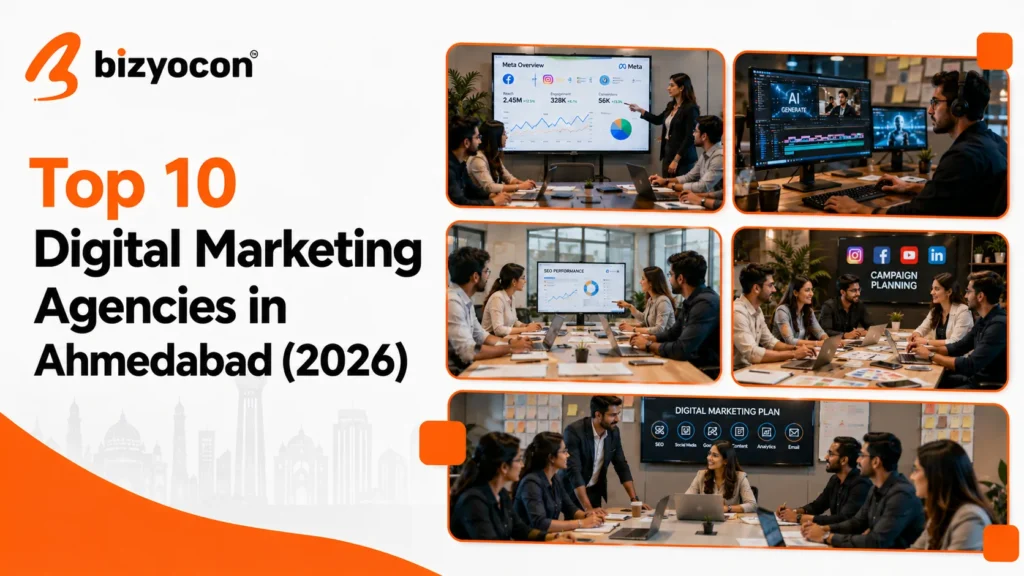
Ahmedabad is one of India’s fastest-growing business hubs – from textiles, real estate and manufacturing to a booming wave of D2C brands and startups. As competition online heats up, the right digital marketing partner can be the difference between getting found on Google and getting lost. If you have been searching for the “best digital marketing agency in Ahmedabad” (or “ahmedabad ma digital marketing agency”), this guide makes your shortlist easier. Below are 10 of the top digital marketing companies in Ahmedabad for 2026. For each agency you’ll find the website, domain, office address, key services and contact number – so you can compare and reach out directly. Let’s dive in. How to Choose a Digital Marketing Agency in Ahmedabad Before you pick, check these five things: (1) a clear portfolio and case studies in your industry, (2) transparent monthly reporting, (3) the specific services you need – SEO, Google Ads, social media or branding, (4) genuine client reviews, and (5) a team that explains strategy in plain language. A good agency focuses on measurable ROI, not just vanity metrics. The Top 10 Digital Marketing Agencies in Ahmedabad 1. Bizyocon KZ Pvt. Ltd. Bizyocon is a fast-growing, results-driven growth partner serving Ahmedabad and businesses across Gujarat. Known for transparent reporting and a full 360° stack, it is a strong choice for SMEs, manufacturers and D2C brands that want measurable leads – not just likes. Its team blends SEO, paid media and creative under one roof. Website: Bizyocon Domain: bizyocon.com Address: 519B, The Landmark, near Hotel Kansar, Kudasan, Gandhinagar (serving Ahmedabad & Gujarat) Services: SEO, Social Media Marketing, Google Ads/PPC, Website Development, Branding, Content Writing, Graphic Design, Performance Marketing, Video Production, Influencer Marketing, 3D Virtual Tours Contact Number: +91 98981 27425 / +91 98983 27416 2. Flora Fountain One of Ahmedabad’s most recognised branding-led agencies, built on the idea that “every brand has a story waiting to be told.” Strong for companies that want brand strategy and performance marketing together. Website: Flora Fountain Domain: florafountain.com Address: 1302, 13th Floor, Shivalik Shilp, Iskcon Cross Road, SG Highway, Ahmedabad – 380015 Services: Branding, Advertising, Web Design & Development, Social Media Marketing, Content, Video, SEO, Performance Marketing, Ecommerce Management Contact Number: +91 95580 79502 3. ShoutnHike Website: ShoutnHike Domain: shoutnhike.com Address: 801, Anand Mangal 3, Opp. Core Biotech, Ambawadi, Ahmedabad – 380006 Services: SEO, PPC Campaign Management, Social Media Marketing, Website Development, Conversion Rate Optimization, Reputation Management, Local SEO Contact Number: +91 99743 60053 4. MediaF5 A data-driven agency on Science City Road focused on ROI-led SEO, paid advertising and content. Good for brands that want customised, results-first strategies. Website: MediaF5 Domain: mediaf5.com Address: 324, iSquare Corporate Park, Science City Road, Ahmedabad Services: SEO (local, technical, ecommerce, enterprise), Social & Content Marketing, Website Development (WordPress/Shopify/Webflow), Paid Advertising (Google, Meta, YouTube) Contact Number: +91 81419 65555 5. Digihify A performance-driven agency trusted by 120+ brands across India, UAE, USA, UK and Australia. Notably future-focused with newer services like AEO and GEO for AI search. Website: Digihify Domain: digihify.com Address: C-1104/1105, PNTC Building, Radio Mirchi Road, Vejalpur, Ahmedabad – 380015 Services: SEO, PPC, Social Media Marketing, Influencer Marketing, CRO, Website Development, Content & Email Marketing, AEO/GEO/LLMO Contact Number: +91 88497 34725 6. Kleverish A performance and ecommerce-focused agency in Vastrapur that emphasises measurable revenue growth – a good fit for online stores and Amazon sellers. Website: Kleverish Domain: kleverish.com Address: 521, Shivalik Shilp 2, Opp. ITC Hotel, Vastrapur, Ahmedabad – 380015 Services: SEO, Google & Social Ads, Social Media Management, Ecommerce Marketing, Amazon PPC, WordPress/Shopify Development, Logo & Video, Brand Strategy Contact Number: +91 93284 13256 7. Bonoboz A long-standing SG Highway agency offering digital marketing, web development and design for both corporate and ecommerce clients. Website: Bonoboz Domain: bonoboz.in Address: 12th Floor, Brooklyn Tower, next to YMCA Club, SG Highway, Ahmedabad – 380015 Services: SEO, Social Media Marketing, PPC, Email Marketing, Corporate & Ecommerce Web Development, Branding, Video Production Contact Number: Enquiry via bonoboz.in (email: contactus@bonoboz.in) 8. Litmus Branding A premium, two-decade-old branding and advertising agency in Bodakdev. Best suited to established brands that need high-end brand strategy alongside digital marketing. Website: Litmus Branding Domain: litmusbranding.com Address: 1002/1, 10th Floor, Panchdhara Complex, near The Grand Bhagwati, SG Highway, Bodakdev, Ahmedabad – 380054 Services: Brand Strategy, Visual Identity & Packaging, Websites & Apps, Advertising, Digital & Influencer Marketing, PR, Media Planning Contact Number: +91 99984 12378 9. Communication Crafts A creative + digital studio on Sindhu Bhavan Road with strong design and content capabilities, now expanding into AI-led solutions. Website: Communication Crafts Domain: communicationcrafts.com Address: 705, Times Square Grand, Sindhu Bhavan Road, Thaltej, Ahmedabad – 380059 Services: Content & Design, Web Development, Digital Marketing, Branding, AI transformation solutions Contact Number: +91 90999 05573 (Sales) / +91 79 2656 4566 10. Brainvire Infotech A global IT and digital marketing company headquartered in Ahmedabad, ideal for enterprises needing digital marketing bundled with large-scale development. Website: Brainvire Domain: brainvire.com Address: Block C, Navratna Business Park, Opp. GTPL, Sindhu Bhavan Road, Bodakdev, Ahmedabad – 380054 Services: Digital Marketing, SEO, PPC, Social Media Marketing, Content Marketing, CRO, plus enterprise web & app development Contact Number: +91 79 4105 4646 Quick Comparison Agency Best For Area Contact Bizyocon KZ Full 360° ROI-focused growth Gandhinagar (serves Ahmedabad) +91 98981 27425 Flora Fountain Branding + performance SG Highway +91 95580 79502 ShoutnHike SEO & PPC (15+ yrs) Ambawadi +91 99743 60053 MediaF5 Data-driven SEO & ads Science City Rd +91 81419 65555 Digihify Performance + AI search Vejalpur +91 88497 34725 Kleverish Ecommerce & Amazon Vastrapur +91 93284 13256 Bonoboz Web + digital marketing SG Highway bonoboz.in Litmus Branding Premium branding Bodakdev +91 99984 12378 Communication Crafts Design & content Thaltej +91 90999 05573 Brainvire Enterprise DM + dev Bodakdev +91 79 4105 4646 Final Word Every agency on this list brings something different to the table. The smart move is to shortlist two or three, compare their approach and reporting, and pick the one that truly understands your business goals. Ready to grow your brand? Partner with a digital
Content Marketing vs. Paid Ads: What Small Businesses in India Should Choose for Maximum ROI?
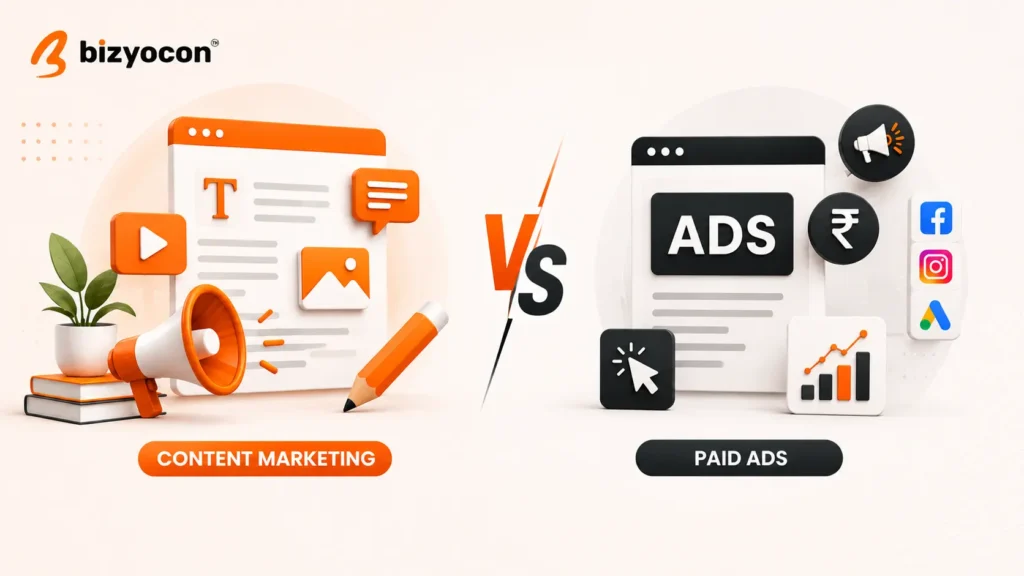
If you run a small business in India and have a limited marketing budget, you’ve probably faced this exact dilemma: should you invest in content marketing or pour money into paid ads? Both promise growth. Both eat into your budget. And both work very differently. This guide breaks down the real trade-offs so you can decide where your money goes, based on your goals, your timeline, and how much you can actually afford to spend. Content Marketing vs Paid Ads: The Core Difference The main difference between content marketing and paid marketing is timing and ownership. Content marketing builds an asset you own that compounds over time, while paid ads rent attention that stops the moment you stop paying. With content marketing, you create blogs, videos, guides, and social posts that attract customers organically through search and sharing. The traffic builds slowly but keeps working long after publishing. Paid advertising – Google Ads, Meta ads, or sponsored listings – buys you instant visibility, but the moment your budget runs out, the leads dry up. Think of it this way. Content marketing is like buying a shop. Paid ads are like renting a billboard by the day. Comparing Marketing Techniques: Content vs Advertising When you put content marketing compared to paid ads side by side, the contrast becomes clear across a few practical factors. Factor Content Marketing Paid Ads Speed of results Slow (3–6 months) Immediate Cost over time Lower long-term Recurring, rises with competition Longevity Compounds, lasts years Stops when budget stops Trust building High Moderate Best for Sustained growth Quick sales, launches This is the heart of any marketing techniques comparison for small enterprises. Content promotion versus advertising isn’t about one being better – it’s about what each does well. Paid campaigns are predictable and fast. Content strategy is patient and cumulative. Video marketing sits across both. A video can be organic content (a YouTube tutorial that ranks for years) or a paid asset (a skippable ad). So content marketing vs video marketing isn’t really a fair comparison – video is a format that lives inside either approach. Benefits of Content Marketing Over Paid Ads The biggest benefit of content marketing over paid ads is that it keeps generating leads without ongoing spend, building trust and authority that advertising alone can’t buy. Here’s what content gives you that ads don’t: The catch is patience. Content marketing ROI for Indian startups usually takes a few months to show, which is hard when you need sales now. When to Use Content Marketing Instead of Paid Ads Use content marketing instead of paid ads when you’re building a long-term brand, your customers research before buying, and you can wait a few months for results. Choose paid ads when you need fast leads, are launching something time-sensitive, or are testing a new market. Most small businesses in India don’t have to pick just one. A practical middle path looks like this: The smartest online advertising methods often work because good content backs them up. A paid ad that sends people to a weak landing page wastes money. The same ad pointing to a useful resource converts far better. Marketing ROI for Small Businesses: How to Actually Measure It To measure marketing ROI for small businesses, compare what you spend against the revenue each channel brings in over a realistic time window – not just immediate clicks. The common mistake is judging content marketing on the same short timeline as paid ads. Paid campaigns show ROI in days or weeks. Content shows its return over months and years. Measuring both the same way makes content look weak when it’s actually still warming up. For a fair picture, track: A blog written once that brings leads for two years has a very different ROI profile than an ad that needs constant funding. Both belong in a serious digital marketing strategy – they just earn their keep differently. Common Mistakes Small Businesses Make A few avoidable errors waste budget on both sides: The Bottom Line For most small businesses in India, the answer to content marketing vs paid ads isn’t either-or. Paid ads give you speed; content marketing gives you staying power. The best returns usually come from using ads to drive early momentum while steadily building content that lowers your dependence on paid spend over time. If you’re short on budget, start with whichever solves your most urgent problem – fast leads or long-term trust – and add the other as you grow. At Bizyocon, we help small businesses and startups build marketing strategies that balance both, so your budget works harder and your growth doesn’t stop the moment the ad spend does. If you’re weighing where to invest next, that’s a conversation worth having. FAQs 1. What is the difference between content marketing and paid marketing?Content marketing attracts customers organically through valuable content like blogs and videos that keep working over time, while paid marketing buys instant visibility through ads that stop delivering once you stop paying. Content builds an owned asset; ads rent attention. 2. What are the benefits of content marketing over paid ads?Content marketing keeps generating leads without ongoing spend, builds long-term trust and authority, lowers cost per lead over time, and improves your visibility in search and AI-generated answers. Its main drawback is that results take a few months to appear. 3. When should I use content marketing instead of paid ads?Use content marketing when you’re building a long-term brand, your customers research before buying, and you can wait a few months for returns. Use paid ads when you need immediate leads, are running a time-sensitive launch, or are quickly testing a new market. 4. What is the difference between content marketing and advertising?Advertising is a paid method to push a message to a target audience for as long as you fund it. Content marketing is a strategy that earns attention by being genuinely useful, and the assets you create continue working without repeated payment.
What Does a Top Branding Agency Actually Do for Your Business?
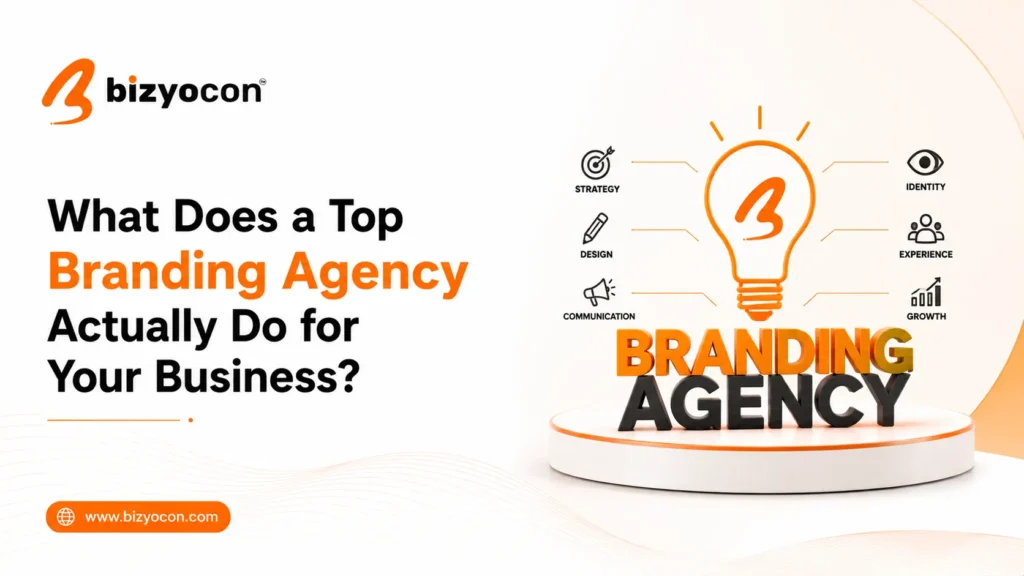
Most businesses know they need a stronger brand. Very few know what that work actually involves or what to expect when they hire a top branding agency to deliver it. If you have ever paid a designer for a logo and wondered why sales never changed, this guide is for you. A logo is not a brand. A brand is the co mplete system of strategy, identity, messaging, and customer experience that decides how people perceive and choose your business. A professional branding agency builds the entire system, not just a single visual asset. In this guide, we explain in detail what a branding company does, how the process works, the measurable results, and how to choose the best branding agency for your goals. What Is a Branding Agency? A branding agency is a specialized branding company that researches, defines, designs, and manages how a business is perceived in its market. It combines brand consultants, strategists, designers, and copywriters under one roof to build a complete brand system. This is different from a general marketing agency. A marketing agency focuses on campaigns, ads, and lead generation activities that create demand today. A brand strategy agency focuses on the foundation below those campaigns: brand positioning, identity, voice, and guidelines. When the campaign budget stops, the brand is what customers still remember. Think of it this way: marketing makes people notice you; branding makes people trust you and come back. A creative branding agency makes sure both happen regularly. A strong branding partner also protects long-term brand equity, the measurable commercial value of being noted and preferred. That is why established businesses treat branding services as an investment, not a design expense. What Does a Top Branding Agency Actually Do? The work of a professional branding agency typically spans five core service areas. Here is what each one actually involves: 1. Brand Strategy Everything starts with strategy. Brand consultants run stakeholder interviews, customer research, market analysis, and competitor audits to answer three questions: Who are you for? Why should they choose you? What should they remember about you? The output is a brand strategy document covering brand positioning, target audience segments, value proposition, brand personality, and brand architecture (how your products or sub-brands relate to each other). Every design and messaging decision later flows from this document; that is what separates a brand strategy agency from a freelance designer working on instinct. 2. Brand Identity Design This is the visual layer most people associate with branding. Brand identity design includes the logo system, color palette, typography, iconography, photography style, packaging design, and overall visual language. A top branding agency designs identity as a system, not a single mark, meaning your brand looks consistent on a business card, a website, a trade-show banner, and an Instagram reel. Consistency is what builds recognition, and recognition is what builds trust. 3. Brand Messaging and Voice Visuals attract attention; words convert it. Brand messaging work includes your tagline, brand story, elevator pitch, tone of voice, and a messaging framework your sales and marketing teams can reuse. A creative branding agency documents how your brand speaks, formal or friendly, technical or simple, so every email, ad, proposal, and social post sounds like it’s from the same company. For B2B businesses, clear brand messaging often shortens sales cycles because buyers immediately understand what you do and why it matters. 4. Brand Guidelines Brand guidelines are the rulebook that keeps everything consistent as you grow. A good brand book documents logo usage, spacing, color codes, typography rules, voice and tone, do’s and don’ts, and template systems. Without guidelines, brands slowly fall apart; every new vendor, employee, or agency interprets the brand differently. With guidelines, you can scale across teams, locations, and channels while staying recognizable. This single deliverable often determines whether your branding investment lasts two years or twenty. 5. Brand Management and Rollout The best branding agency does not disappear after handing over files. Rollout services include launch planning, website and collateral updates, internal brand training, asset libraries, and periodic brand audits. For companies undergoing rebranding services after a merger, a market shift, or a reputation problem, managed rollout is critical. A rebrand that never fully ships confuses customers more than the old brand did. How Does a Branding Agency Work? While methods vary between firms, most established branding companies follow a research-first workflow: Phase What Happens Typical Output 1. Discovery Stakeholder interviews, customer research, brand audit Research and audit report 2. Strategy Positioning, architecture, messaging hierarchy Brand strategy document 3. Identity Visual and verbal identity design, concept testing Logo system, voice guide 4. Guidelines Codifying usage rules and templates Brand book 5. Rollout Applying the brand across all channels Website, collateral, templates, training Why Choose a Top Branding Company Over Freelancers or In-House Teams? A freelancer can design a logo. An in-house team can maintain a brand. But building or repositioning a brand requires a multidisciplinary team: strategists, researchers, brand consultants, designers, and copywriters working from a proven process. Key decision factors to evaluate before you choose a branding partner: Applications: When Does Your Business Need Branding Services? If any of these describe your situation, a structured engagement with a brand strategy agency will deliver far more value than piecemeal design work. Different situations call for different branding services: What Does Working With a Branding Agency Cost and What Is the ROI? Branding engagements range widely from focused brand identity design projects to multi-month strategic rebranding services. Pricing depends on research depth, number of deliverables, stakeholder complexity, and rollout scope. The more useful question is the cost of inaction: inconsistent branding confuses buyers, weakens recall, lengthens sales cycles, and forces you to compete on price alone. A practical way to evaluate branding ROI: Set realistic timelines. Brand perception shifts over quarters, not weeks. Any branding company promising overnight transformation should raise a red flag. Best Practices for Working With a Branding Agency To get maximum value from your engagement: Key Takeaway A top branding agency does
Top Technologies Used by Leading Website Development Companies in 2026
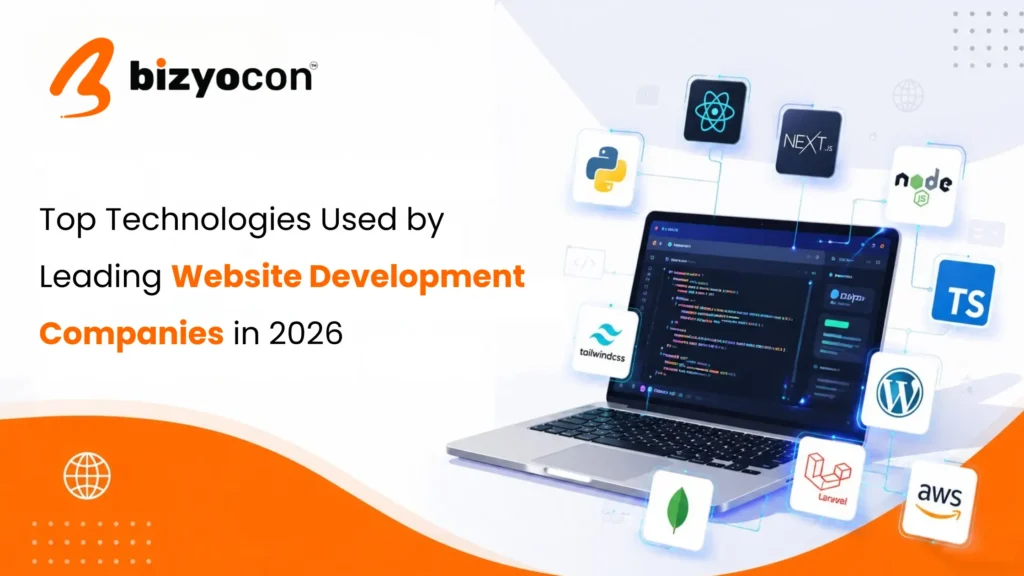
The web development industry has shifted significantly. What was considered advanced just three years ago is now standard practice. In 2026, website development companies are working with technologies that prioritise speed, intelligence, scalability, and security – not just visual design. For anyone planning a new website or evaluating a development partner, understanding these technologies gives you a genuine advantage. You can ask better questions, evaluate proposals more accurately, and make decisions based on what actually matters for long-term performance. This guide covers the core technologies professional website development companies are using in 2026 – what each one is, how it works, and why it matters. What Is a Technology Stack? Before diving into individual technologies, it helps to understand what a technology stack actually means. A technology stack is the combination of: Programming languages Frameworks and libraries Databases Hosting infrastructure Third-party tools and APIs Every website runs on a stack – whether simple or complex. The stack determines how fast the site loads, how securely it handles data, how easily it scales, and how efficiently developers can maintain it over time. Choosing the wrong stack creates problems that are expensive to fix later. Choosing the right one builds a foundation that supports business growth for years. 1. Artificial Intelligence Integration AI has moved from experimental to essential in website development. In 2026, AI is embedded into websites as a functional layer – not just a marketing feature. How AI Is Used in Websites Today Personalisation – content, product recommendations, and layouts that adapt to individual user behaviour in real time Conversational interfaces – AI chatbots that handle complex queries, not just scripted responses Natural language search – search bars that understand meaning and intent, not just exact keywords Predictive analytics – identifying what users are likely to do next and optimising the experience accordingly Automated accessibility checks – AI tools that scan for and fix accessibility issues continuously 2. Progressive Web Apps (PWAs) A Progressive Web App is a website built with modern browser capabilities that allow it to behave like a native mobile application – without requiring download from an app store. How PWAs Work PWAs use three core technologies: Service Workers – scripts that run in the background, enabling offline functionality and caching Web App Manifest – a file that tells the browser how to display the app when installed HTTPS – required for security and Service Worker functionality Why It Matters in 2026 For markets where mobile internet speed and reliability vary – including large parts of India, Southeast Asia, and Africa – PWA technology dramatically improves user experience across all network conditions. A PWA loads instantly on repeat visits, works without connectivity, and feels like an app without the friction of installation. 3. Headless CMS Architecture Traditional content management systems like WordPress couple the backend content database with the front-end display layer. Headless CMS separates them completely. How Headless CMS Works Content Backend (Headless CMS) ↓ API Layer ↓ Any Front-End → Website / Mobile App / Voice Interface / Smart Device Content is created once in the CMS and delivered via API to any platform or device simultaneously. Popular Headless CMS Platforms in 2026 Contentful – enterprise standard, robust API Sanity – flexible, real-time collaboration Strapi – open-source, self-hosted option Hygraph – GraphQL-native architecture Payload CMS – developer-first, TypeScript-based 4. JavaScript Frameworks Next.js, React, and Vue.js Modern website development companies build with JavaScript frameworks rather than traditional server-rendered HTML. These frameworks deliver faster, more dynamic, and more maintainable websites. Most Widely Used Frameworks in 2026 Framework Primary Use Case Key Strength Next.js SEO-focused sites, e-commerce Server-side rendering + React ecosystem React.js Large web applications Component reusability, massive ecosystem Vue.js Mid-size projects Lightweight, approachable Nuxt.js Content-heavy sites SEO + Vue combined Svelte Performance-critical apps Minimal JavaScript output Angular Enterprise applications Full-featured, opinionated structure Why Next.js Is the Default Choice in 2026 Next.js solves a problem that pure React applications have – they render content in the browser, which makes Google crawling inconsistent. Next.js renders pages on the server first, meaning: Google crawls full page content reliably Initial page load is significantly faster Core Web Vitals scores improve substantially Time to First Byte (TTFB) decreases For any website where SEO performance matters – which is the majority of business websites – Next.js has become the standard framework of choice among professional development teams. 5. API-First Development API-first development is an architectural approach where every website function is built as an independent service that communicates through APIs, rather than as one monolithic application doing everything. How It Works in Practice A modern business website in 2026 typically connects to: Payment gateway (Stripe, Razorpay) CRM system (HubSpot, Salesforce) Email marketing platform (Mailchimp, Klaviyo) Inventory management system Analytics platform Shipping and logistics APIs WhatsApp Business API In API-first architecture, each of these operates independently and connects cleanly to the website’s core layer. Why It Matters Flexibility – replace one service without rebuilding everything Reliability – one service failing does not bring down the whole site Scalability – each service scales based on its own demand Speed of development – use best-in-class tools for each function rather than building from scratch 6. Core Web Vitals and Performance Engineering Core Web Vitals are Google’s set of user experience metrics that directly influence search ranking. In 2026, performance engineering around these metrics is a standard component of professional website development – not optional. The Three Core Web Vitals Metric What It Measures Target Score Largest Contentful Paint (LCP) Speed of main content loading Under 2.5 seconds Interaction to Next Paint (INP) Responsiveness to user input Under 200 milliseconds Cumulative Layout Shift (CLS) Visual stability during loading Under 0.1 How Development Companies Optimise for These Image optimisation – WebP format, correct dimensions, lazy loading Code splitting – loading only the JavaScript needed for the current page CDN implementation – serving assets from servers geographically close to the user Caching strategies – reducing server requests on repeat visits Third-party script auditing – identifying and
Digital Marketing: A Complete Beginner’s Guide
In today’s rapidly changing digital landscape, businesses – especially those operating in B2B and industrial sectors – simply cannot afford to rely on traditional marketing methods anymore. Modern buyers do their research online, compare multiple options, and often make up their minds before they even reach out to a supplier. This shift has made working with a professional Digital Marketing Agency not just beneficial, but essential for sustainable growth and staying competitive. A modern Digital Marketing Agency does far more than basic promotion. It leverages AI, automation, and data analytics to reach the right audience, bring in qualified leads, and push conversion rates higher. From search engine visibility to targeted advertising and content strategy – everything is built around delivering real, measurable business results. Add to that the constantly shifting algorithms on platforms like Google and the growing competition across industries, and it becomes clear why expert guidance matters. Whether you are a manufacturer, exporter, or service provider, digital marketing helps you connect with decision-makers across the globe with precision and efficiency. This guide breaks down what digital marketing actually means in 2026, the key trends reshaping the industry, and how the right Digital Marketing Agency can help your business scale smarter and faster. What is Digital Marketing in 2026? Digital marketing in 2026 is built around data-driven personalization, AI integration, and omnichannel communication strategies that closely follow customer behavior and respond to real-time engagement signals. The core elements shaping digital marketing today are: AI-powered automation Personalized customer journeys Omnichannel engagement Role of a Digital Marketing Agency in Today’s Market Today, a Digital Marketing Agency is no longer just a vendor – it functions as a strategic growth partner. It helps businesses adopt advanced technologies and fine-tune campaigns to consistently generate leads and drive revenue. Here is what modern agencies are handling: AI-driven campaign optimization Predictive analytics for lead generation Multi-channel integration Conversion-focused strategies Top Digital Marketing Trends in 2026 Digital marketing trends are shifting fast – moving toward automation, personalization, and data privacy. Businesses that want to stay competitive need to embrace smarter tools and stay agile in their approach. Here are the key trends shaping the industry right now: 1. AI-Powered Marketing Automation AI allows businesses to automate repetitive marketing tasks while simultaneously improving targeting accuracy and campaign performance – all driven by real-time data and machine learning. Key advantages include: Automated ad optimization Smart audience targeting Real-time performance adjustments 2. Voice & Conversational Search Optimization As voice assistants become a bigger part of everyday life, search queries are getting more conversational. Businesses now need to optimize their content for natural language and intent-driven searches. Optimization should focus on: Long-tail keywords Natural language content FAQ-based structure 3. First-Party Data Strategy With third-party cookies phasing out and privacy regulations tightening, businesses are shifting to first-party data. This gives them direct control over customer insights without depending on external sources. This includes data sources such as: CRM systems Website analytics Email subscriber data 4. Video & Short-Form Content Dominance Short-form video continues to dominate across digital platforms. It drives high engagement and opens up powerful storytelling opportunities – even for industrial and B2B brands. Popular formats include: Product demonstrations Industrial process videos Customer testimonials Stay Ahead with the Right Digital Marketing Agency Ready to implement cutting-edge strategies with a professional Digital Marketing Agency? Click here 5. Account-Based Marketing (ABM) for B2B ABM takes a focused approach – targeting specific high-value accounts with personalized campaigns. For industrial businesses looking for quality leads and long-term partnerships, it is one of the most effective strategies available. Key benefits include: Higher conversion rates Improved ROI Stronger relationships Key Services Offered by a Digital Marketing Agency Modern agencies deliver integrated solutions that combine traditional marketing techniques with cutting-edge technologies to produce scalable, measurable outcomes for businesses. Here are the updated core services: SEO + AI Optimization : Today’s SEO goes beyond keywords and backlinks. It combines traditional optimization with AI-powered tools to improve search rankings, enhance user experience, and align content with what users are actually searching for. Performance Marketing (PPC + Data) : Performance marketing is all about results you can measure. Through data analytics and targeted paid campaigns, it drives immediate traffic and attracts leads that are genuinely interested in what you offer. Advanced Content Marketing : Content marketing has evolved into value-driven storytelling. It now focuses on search optimization and conversion-focused messaging that speaks directly to industrial and B2B audiences. Social Media for B2B Growth : Social media platforms are used strategically to build brand authority, keep audiences engaged, and generate leads through consistent and targeted communication. Marketing Automation & Email Funnels : Automation tools make lead nurturing efficient and scalable – delivering the right message to the right person at every stage of the buyer journey. How Digital Marketing Works Today Digital marketing today follows a structured, technology-driven framework that ties together data, strategy, and automation – ensuring campaigns run efficiently and deliver outcomes you can actually track. Here is the step-by-step framework: Data Collection – Gather user insights AI Analysis – Identify patterns Strategy Execution – Launch campaigns Automation – Optimize performance Conversion Tracking – Measure ROI Digital Marketing Channels in 2026 Businesses today use a smart mix of owned, earned, and paid media channels to maximize reach, build credibility, and generate leads across multiple touchpoints. Channel Type Example Purpose Owned Media Website, Blog Brand control Earned Media SEO, PR Trust building Paid Media Ads Fast lead generation Why Businesses Need a Digital Marketing Agency Now More Than Ever With competition intensifying and technology evolving at a rapid pace, partnering with a skilled Digital Marketing Agency gives businesses a real edge – through expertise, the right tools, and strategies that actually move the needle. Key advantages include: Access to advanced tools Faster trend adaptation Better lead quality Scalable growth strategies High-Authority References HubSpot – Marketing trends and insights Gartner – B2B strategy research Statista – Industry data and reports How to Choose an Innovative Digital Marketing Agency Choosing the
What Is the Difference Between Web Design and Web Development Services?
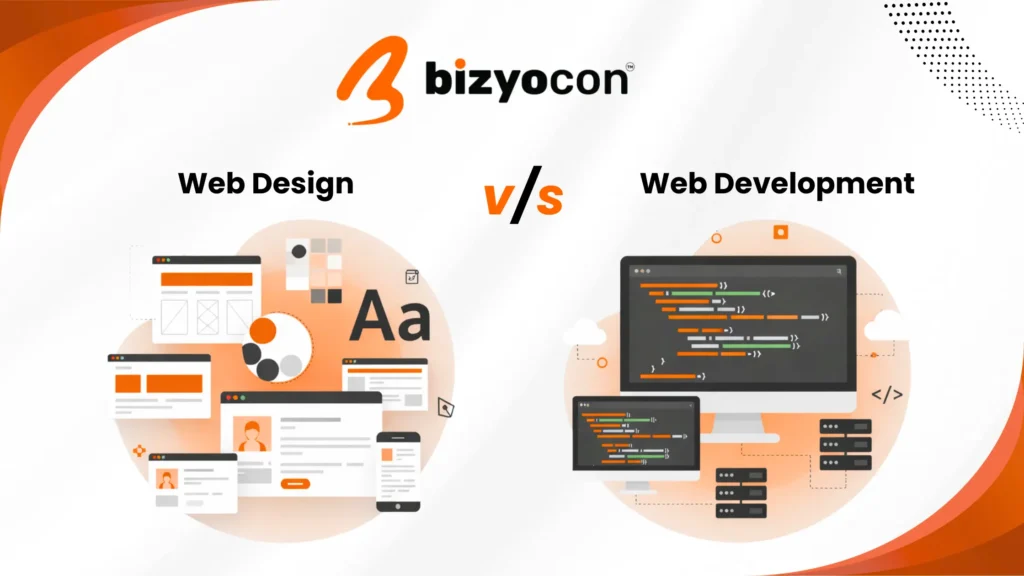
What Is the Difference Between Web Design and Web Development Services? Today, in the digital space, a professional website is a necessity, not a luxury. The challenge, however, usually lies in the fact that many business owners usually confuse the two concepts, web design and development. Though both of them are equally important for the development of a successful website, they only focus on two different areas of the same activity. Understanding Web Design Web design is usually on the visual and user experience aspects of a website. It represents how a website looks, feels, and interacts with visitors. Visual Look and Branding They are responsible for the creation of the basic design, color scheme, typography, and imagery of the website. Their prime goal is to ensure that the site design fits well with the identity of the brand and makes an exceptional first impression. A well-designed website should: Make sure that the brand personality reflects. Use the same colors and fonts. Show information in a pictorial manner User Experience (UX) and User Interface (UI) Designers also consider the interaction between the users and the website. They lay out the structure and navigation of the site for easy usage. A good UX design guarantees that: Visitors can easily find information Navigation is intuitive The display of pages is logical and clear. Understanding Web Development Web development involves the technical aspect of creating and maintaining a website. It translates design ideas into a fully functional digital platform. Front-End Development Front-end developers take the designed visuals and develop them into dynamic web pages using technology such as HTML, CSS, and JavaScript. They ensure that the website works excellently on different devices and in various browsers. Back-End Development Back-end developers handle server-side functionality. This includes: Database management Server configuration Application logic Security features They ensure that forms submit correctly, user accounts function properly, and dynamic content updates as required. Key Differences Between Web Design and Web Development Basis Website Design Website Development Main Focus Visual appearance & user experience Functionality & technical structure Goal Make the website look attractive and user-friendly Make the website work smoothly and efficiently Key Skills UI/UX design, layout planning, branding Coding, programming, database management Tools Used Figma, Adobe XD, Photoshop HTML, CSS, JavaScript, PHP, frameworks Output Wireframes, mockups, design layouts Live, interactive, functional website Involves Coding? No (mostly design tools) Yes (front-end & back-end coding) User Impact First impression & navigation ease Speed, performance, and features Reasons Why Both Services Are Equally Important A website that is visually attractive but lacks proper functionality may be equally disappointing to the end-users. Similarly, a website that has functionality may be of little use if it lacks proper design. This is the reason why a business should try and look for complete web design and development services. Want a Website That Looks Great and Performs Even Better? If you’re planning to build or upgrade your website, choose a partner that offers complete solutions under one roof. Bizyocon provides professional web design and development services customised to your business goals, ensuring both visual appeal and technical expertise. Click here How Integrated Services Benefit Your Business When design and development teams collaborate closely, the final product becomes more efficient and impactful. Faster Project Completion Being part of a united team can help eliminate communication problems or speed up the developmental process. Better Performance and SEO Adequate coding and proper design can improve loading speed, responsiveness, and search engine friendliness. Scalability for Future Growth Adding features and making content easy to update are some of the benefits of an integrated web solution. Conclusion It is highly important to understand the difference in meaning of the terms web design and web development. Both aspects of a website are equally important for building a powerful and professional website. Web design is concerned with the aesthetic aspect of a website, which includes the visual appeal and the user-friendly nature of a website. Web development deals with the functionality of a website. When a business decides to utilize the best in terms of web design and development at Bizyocon, they are able to achieve a powerful website for their business.